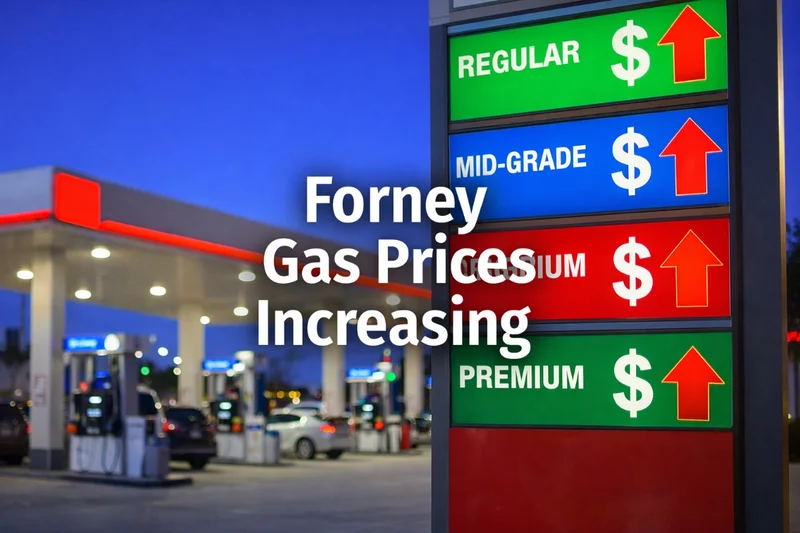
FORNEY — Gasoline prices have climbed steadily during the opening months of 2026, continuing a trend that is beginning to affect drivers across Forney and Kaufman County.
New data from the U.S. Energy Information Administration (EIA) shows the national average price for regular gasoline rising from $2.468 per gallon during the week of January 5 to $2.711 per gallon by March 2. That represents an increase of 24.3 cents per gallon, or about 9.9 percent, in just two months.
The increase has been gradual but persistent, with the sharpest jump occurring in the most recent week of available data.
Gas Price Trends in Early 2026
(EIA National Average – Regular Gasoline)
Jan. 5: $2.468
Feb. 2: $2.534
Mar. 2: $2.711
The move between February 23 and March 2 alone added nearly 14 cents per gallon, a weekly jump of roughly 5.2 percent.
For commuters in North Texas, the shift means noticeably higher fill-up costs compared to the start of the year.
Local Prices in Forney
Fuel prices in Forney generally track slightly above national averages.
According to fuel price tracking compiled by Way.com, the average price for regular gasoline in Forney is currently about $2.88 per gallon, compared with $2.89 a month ago. The highest recorded average price in the city this year reached $2.93 per gallon on March 5.
Other fuel grades in the area are also elevated:
Mid-grade: about $3.27 per gallon
Premium: about $3.61 per gallon
Diesel: about $3.32 per gallon
At individual stations around Forney, prices for regular gasoline on March 7 ranged roughly from $2.99 to $3.39 per gallon, depending on the location and brand.
For drivers commuting daily between Forney and Dallas along U.S. Highway 80 or Interstate 20, even modest price increases can translate into noticeably higher monthly fuel costs.
Why Gas Prices Are Rising
Several seasonal and global factors are pushing prices higher.
Every spring, U.S. refineries enter maintenance season, when facilities temporarily reduce production for repairs and upgrades. This tightening of supply typically occurs in February and March, just as demand begins to increase ahead of the summer driving season.
At the same time, refiners must transition to summer-blend gasoline, a formulation required by federal environmental rules that reduces evaporation in warmer weather. Summer fuel is more expensive to produce, which often pushes retail gasoline prices higher.
This year, geopolitical tensions involving Iran in the Middle East have added another layer of pressure to global oil markets.
Energy traders are closely watching the Strait of Hormuz, a narrow shipping channel near Iran through which roughly one-fifth of the world’s oil supply normally passes. Any threat to tanker traffic in the region can quickly push crude oil prices higher, which eventually filters down to gasoline prices in the United States.
While the United States produces large amounts of oil domestically, fuel markets remain globally connected. Price spikes overseas can still influence the cost of gasoline at stations across Texas.
What Drivers Can Expect
Historically, gasoline prices tend to rise through the spring and early summer, often peaking around Memorial Day or the height of the summer travel season.
If the current trend continues, analysts say North Texas drivers could soon see average prices in the $3-per-gallon range locally, particularly if crude oil prices continue to rise or geopolitical tensions escalate.
For Forney residents who rely on daily commuting, the roughly 10 percent increase in gasoline prices since January is already becoming visible in weekly fuel budgets — a reminder that global energy markets can quickly ripple down to the local pump.