A federal judge in Florida has sharply criticized the conduct of attorneys on both sides of a high-profile defamation lawsuit involving conservative activist Laura Loomer and comedian Bill Maher, warning that sanctions may be imposed after what the court described as deeply unprofessional and chaotic depositions.
In a 12-page order issued December 4, U.S. Magistrate Judge Philip R. Lammens of the Middle District of Florida detailed hours of deposition footage marked by yelling, insults, improper objections, and inflammatory political commentary. The judge ordered Loomer’s attorney, Larry Klayman, and defense counsel Jessica Bolger of Davis Wright Tremaine to appear and show cause why they should not be sanctioned for violating basic standards of professionalism and civility.
“This is not the way the law works,” the judge wrote, quoting Maher himself during one exchange, before adding bluntly: “The Court demands better from counsel.”
Case Background
The underlying lawsuit was filed by Loomer against Maher and HBO, alleging defamation stemming from statements made on Maher’s HBO program Real Time with Bill Maher. While the merits of the defamation claims were not decided in this order, the court focused exclusively on discovery conduct, particularly depositions of Maher, Loomer, and HBO’s corporate representatives.
The ruling stemmed from Loomer’s own motion seeking sanctions against Maher, HBO, and their lawyers. Instead, the court found that both sides engaged in conduct that may warrant discipline under federal rules, federal statute, and the court’s inherent authority.
A Breakdown of Professional Conduct
According to the order, Maher’s deposition alone lasted more than three and a half hours and included harassing questions about religion, personal life, and decade-old tweets unrelated to the case. The court noted repeated instances where Loomer’s counsel made speeches instead of asking questions, mischaracterized testimony, and suggested Maher could not receive a fair trial due to Ocala’s religious demographics.
At the same time, defense counsel was faulted for argumentative objections, sarcastic commentary, and at least one remark referencing Klayman’s disciplinary history. Rather than defusing tensions or seeking court intervention, both attorneys escalated disputes in real time, often speaking over one another in raised voices.
The court emphasized that depositions are meant to resemble courtroom proceedings in seriousness and decorum, even though they occur outside a judge’s immediate supervision.
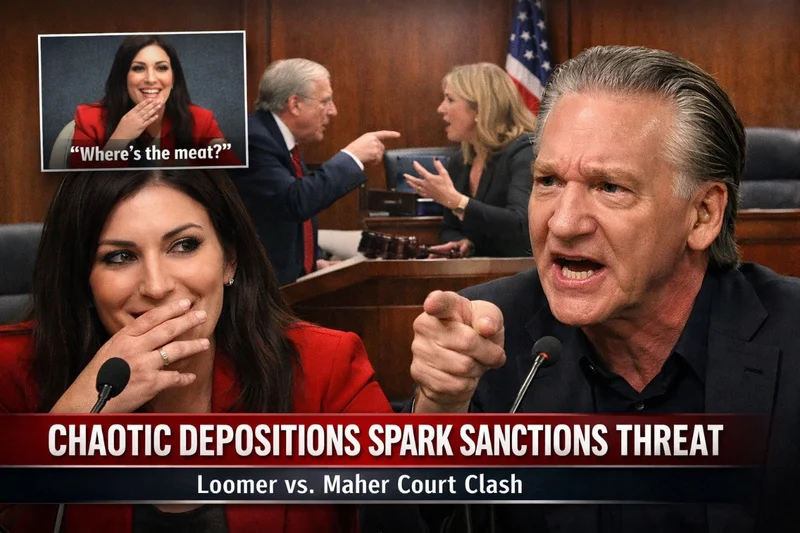
One portion of the ruling that has drawn particular attention involved Loomer’s deposition testimony about a tweet referencing Rep. Marjorie Taylor Greene and the phrase “Arby’s in your pants.” The judge described the exchange as “objectively ridiculous,” noting that Loomer refused to directly explain the meaning of her own words. During the exchange, Loomer laughed while her attorney appeared to encourage the evasiveness by interjecting, “Where’s the meat?” to which Loomer responded, “It’s in her pants.”
The court cited this moment as emblematic of the broader problem: a failure by counsel to control their client and ensure meaningful testimony. The judge stated that Klayman’s refusal to rein in Loomer’s behavior was “inexcusable” and inconsistent with his obligations as an officer of the court.
Political Rants and Improper Objections
The ruling also recounts multiple instances where Loomer used profanity, accused opposing counsel of “hating America,” and launched partisan attacks during questioning. At one point, Loomer referred to Democrats using explicit language on the record. The court noted that her attorney took no meaningful steps to stop the conduct.
Klayman was further criticized for improper objections that included political commentary, such as describing the Associated Press as a “Trump-hating organization” and making inflammatory claims unrelated to any legitimate legal objection.
What Happens Next
Rather than immediately imposing penalties, the court ordered both attorneys to show cause by December 18 why sanctions should not be imposed. Possible sanctions listed in the order include monetary penalties, referrals to grievance committees, revocation of special admissions, or other non-monetary directives aimed at enforcing professionalism.
The judge made clear that “mutual enmity does not excuse the breakdown of decorum,” rejecting arguments that one side’s misconduct justified the other’s behavior.
While the defamation case itself continues, the ruling serves as a stark reminder that federal courts expect lawyers to maintain control, civility, and focus—even in politically charged, high-profile litigation.
For readers following the case, the most immediate takeaway is not about who will ultimately win the lawsuit, but whether the lawyers involved will face discipline before the case ever reaches a jury.